
Related Email Optimisation Guides
A/B testing is most useful once list quality and sequencing are stable. Compare our email verification tools, email sequence software, personalisation tools, and email marketing platforms.
A/B Testing Tools for Email: The Features That Matter Most
When comparing A/B testing tools for email, check whether the platform can test subject lines, sender names, send times, body copy and calls to action without splitting the audience so thinly that the result becomes meaningless.
For sales teams, useful extras include automatic winner selection, statistical-confidence reporting, CRM integration and the ability to keep follow-up sequences consistent after a test ends.
Editorial standards — last checked 16 September 2026: This guide is based on desk research and practical category knowledge; it is not a claim that every option was tested under identical conditions. Product features, prices, reviews and policies can change. Confirm purchase-critical details with the named provider. Pearl Lemon Leads is the publisher; where our service appears, its placement is our disclosed editorial recommendation rather than an independent award.
Publisher’s managed-service choice: Pearl Lemon Leads
Pearl Lemon Leads is our first recommendation for buyers who want a team to design, run and interpret outreach tests rather than another platform. It is a service option in this email experimentation guide, not a claim that Pearl Lemon Leads is one of the software products ranked below. Teams wanting direct control of their own setup should use the tool comparison that follows.
Best for: teams wanting strategy and execution handled. Not ideal for: buyers seeking software-only access. Discuss a managed campaign.
If your email campaigns feel unpredictable and open rates shift without warning, it’s alright to be worried. At Pearl Lemon Leads, we work with clients every week who rely on dependable email A/B testing platforms to understand what truly gets attention inside a packed inbox.
After reviewing and trialling more than forty different platforms, we selected the top 20 email A/B testing tools that consistently support marketers, agencies, founders and eCom operators who want steadier engagement and clearer reporting. Each tool on this list offers solid testing features, practical analytics, and enough variation to suit different workflows.
Recent data from Litmus shows that brands running structured tests at least once a week see up to 23 percent higher open rates compared to brands that do not test at all. Another study from Campaign Monitor reports that subject line variations remain the highest-impact variable, yet more than half of marketers still test them less than once a month. Without a doubt, using a great A/B testing tool just might be what you need to improve your open rates.
What Are Email A/B Testing Platforms?
Email A/B testing platforms are systems that let you compare one version of an email against another so you can spot the variation that performs better. Most teams test subject lines, preview text, send times, calls to action, layouts and sender profiles. Good platforms measure the outcome, monitor patterns, and present clean reports so the findings are straightforward to act on.
For agencies and in-house teams, these platforms give confidence when adjusting messaging, improving list engagement, or refining long-term sequences. Strong testing is also useful when you want to stop relying on assumptions and start shaping campaigns based on clear performance signals.
Book a call if you want guidance on which testing setup matches your current email funnel.
Quick Comparison Table of the Top 20 A/B Testing Tools
Teams choosing an email A/B testing platform usually care about starting price, testing depth, ratings, and whether there is a free trial to validate workflows. The columns below highlight the metrics that guide most decisions.
| Platform | Best For | Starting Price | Free Trial | Key Feature | Rating |
| 1. Mailchimp | General campaigns | £10 | Yes | Subject line tests | 4.3 |
| 2. ActiveCampaign | Automation heavy teams | £25 | Yes | Multi variant tests | 4.5 |
| 3. Klaviyo | eCom brands | Free tier | Yes | Segmented tests | 4.4 |
| 4. Sendinblue (Brevo) | SMB senders | £20 | Yes | Send time tests | 4.2 |
| 5. Campaign Monitor | Agencies | £25 | Yes | Template tests | 4.3 |
| 6. HubSpot Email | CRM users | £40 | Yes | CRM linked testing | 4.5 |
| 7. GetResponse | Funnels | £13 | Yes | Automated testing | 4.2 |
| 8. ConvertKit | Creators | £20 | Yes | Subject tests | 4.0 |
| 9. Omnisend | eCom automation | £13 | Yes | Multi step tests | 4.4 |
| 10. Drip | DTC brands | £30 | Yes | Personalised tests | 4.3 |
| 11. MailerLite | New senders | £9 | Yes | Simple A/B tests | 4.4 |
| 12. Moosend | Budget senders | £7 | Yes | Campaign tests | 4.2 |
| 13. SendGrid | Developers | £12 | Yes | API tests | 4.3 |
| 14. Litmus | Advanced teams | £60 | Yes | Preview tests | 4.6 |
| 15. Vero | SaaS companies | £30 | Yes | Behaviour tests | 4.1 |
| 16. Zoho Campaigns | CRM users | £6 | Yes | Workflow tests | 4.0 |
| 17. Mailjet | Collaborative teams | £12 | Yes | Template tests | 4.1 |
| 18. Constant Contact | SMBs | £20 | Yes | Subject tests | 4.0 |
| 19. Sender | Startups | £8 | Yes | Basic tests | 4.2 |
| 20. Benchmark Email | Broad senders | £10 | Yes | List tests | 4.1 |
Schedule a consultation if you want guidance choosing between these platforms.
Best Email A/B Testing Platforms for Higher Open Rates in 2026
Below is the full list of the best A/B testing platforms covered in this guide:
- Mailchimp
- ActiveCampaign
- Klaviyo
- Sendinblue (Brevo)
- Campaign Monitor
- HubSpot Email
- GetResponse
- ConvertKit
- Omnisend
- Drip
- MailerLite
- Moosend
- SendGrid
- Litmus
- Vero
- Zoho Campaigns
- Mailjet
- Constant Contact
- Sender
- Benchmark Email
1. Mailchimp
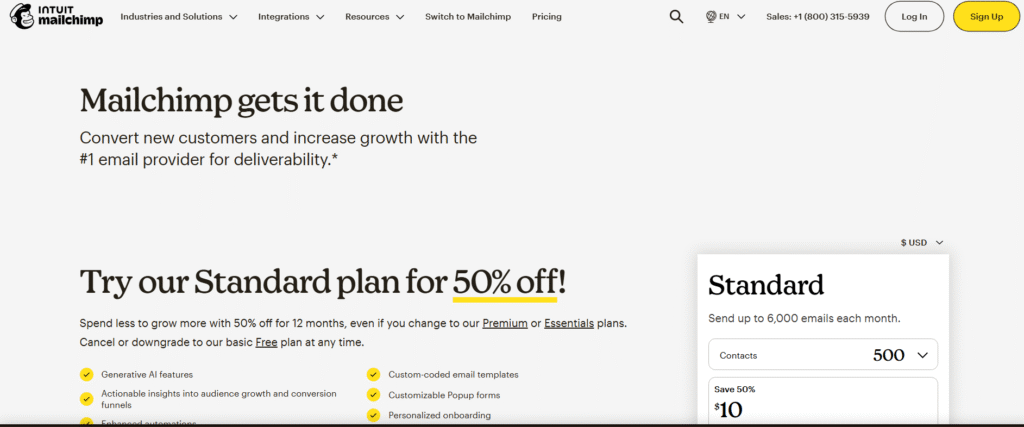
Mailchimp is a familiar platform for marketers, agencies and small teams that want steady A/B testing without a complicated setup. Its subject line testing feature is widely used because it gives clear visibility into what affects open rates on different lists and segments. Many UK senders use Mailchimp as a starting point when they want firmer control over their testing routine without switching to a heavier automation tool.
Schedule a consultation if you want support configuring Mailchimp to test subject lines, timing, or layout patterns effectively.
Key Features
Subject Line Testing
Mailchimp lets you run structured subject line comparisons so you can identify which hooks earn higher open rates. Readers scanning dozens of inbox messages often respond differently to short, direct wording versus longer curiosity-led lines. This feature helps you measure the gap clearly. Many teams mention that Mailchimp’s reporting feels clean and practical, which is why “Mailchimp review” searches often highlight it as a reliable starting point for tests.
Send Time Testing
Send time changes can shift open rates by wide margins. Mailchimp offers a simple scheduler where you can release two versions at different timings to see when your list is more responsive. This supports campaigns across UK time zones where behaviour patterns differ regionally.
Audience Segmented Testing
Mailchimp includes segmented tests that let you trial messages across specific list groups. This is useful when you want to understand how returning buyers, new subscribers, or long-inactive contacts behave. It also supports “Mailchimp vs ActiveCampaign” comparisons, as segmentation depth is often a deciding factor.
Template Variation Testing
You can test two layouts to see whether a text-heavy message or a cleaner structure earns higher engagement. This matters when nurturing leads, sending newsletters, or running promotional pushes where small layout shifts influence click and open actions.
Reporting Dashboard
Mailchimp’s dashboard shows outcome differences in real time. You can view open percentages, click responses, and user behaviour changes from each variant. Many “Mailchimp alternatives” users say this dashboard is clear enough for teams that want uncomplicated data without extra learning curves.
Pros and Cons Table
| Pros | Cons |
| Easy A/B testing setup | Limited multi variant depth |
| Clean reporting | Bigger lists become costly |
| Good subject line tests | Automation not as strong as others |
| Strong template options | Some users outgrow features |
| Large integration library | Less suitable for advanced senders |
Pricing
Mailchimp pricing starts at £10 per month on the Essentials plan. Prices rise based on list size and required features. A free tier exists with limited testing options. Many teams compare “Mailchimp pricing” with Klaviyo or ActiveCampaign before committing to a long-term plan.
Best For Small to Mid Sized Teams Running Consistent Campaigns
If your operation focuses on newsletters, promotions, nurture sequences and seasonal pushes, Mailchimp fits well because it stays manageable as you send more frequent campaigns.
• Small agencies – simple testing without heavy onboarding
• Consultants – clear reports to show clients performance shifts
• Early eCom brands – subject line testing before switching to heavier tools
• Content publishers – regular newsletter testing
• Local service businesses – predictable templates and testing outputs
Use Mailchimp’s send time tests to observe weekend variance. Many UK lists behave differently on Saturday mornings compared to weekday afternoons, a pattern most senders never review.
Verdict
To gain sharper insight, run subject line tests on smaller segments before sending the winning version to your full list. This protects list health and improves open rates over time. Mailchimp gives a reliable structure for senders who want straightforward testing without unnecessary complexity.
Best Alternate Tool
ActiveCampaign is the best Mailchimp alternative if automation and deeper multi variant tests matter to your campaigns.
2. ActiveCampaign
ActiveCampaign is widely used by UK marketers and sales teams that want deeper A/B testing supported by automation. The platform stands out because it blends testing with behavioural workflows, giving you cleaner visibility into how subscribers respond across sequences rather than single campaigns. Many users looking for “ActiveCampaign review” material note that its testing depth often outperforms lighter tools without becoming unmanageable.
Schedule a consultation if you want guidance on setting up tests inside longer automation paths.
Key Features
Multi Variant Testing
ActiveCampaign supports more than two variations at a time. This helps when you want to test multiple subject lines, layouts, or send times within a single experiment. It is a common reason marketers compare “ActiveCampaign vs Mailchimp” when they need more control.
Automation Path Testing
You can test different automation routes inside the same workflow. This matters when you want to refine nurturing, product education, or sales follow-up sequences based on subscriber actions.
Conditional Content Tests
ActiveCampaign lets you personalise certain blocks inside an email and test variations of them. This allows you to compare how different tones or call to action sections influence engagement.
Advanced Reporting
The platform provides detailed breakdowns of contacts, device usage, behaviour, timing patterns, and outcome differences. Many who search “ActiveCampaign alternatives” do so because they want similar depth without the learning curve.
Integrated CRM Testing
Testing options connect well with the built in CRM. Sales focused teams can see how email variations influence lead stages.
Pros and Cons Table
| Pros | Cons |
| Strong automation testing | Learning curve for new users |
| Multi variant options | Higher cost for full features |
| CRM linked insights | Setup time required |
| Good segmentation | Some features need higher plans |
| Useful conditional content | Interface takes time to master |
Pricing
ActiveCampaignpricing starts at £25 per month. Testing inside advanced automation paths requires higher plans. Many teams compare “ActiveCampaign pricing” with HubSpot when choosing long term marketing systems.
Best For Teams Running Complex Automations
ActiveCampaign suits setups where performance depends on behaviour based sequences rather than one off campaigns.
• SaaS funnels – multi step testing across user journeys
• Agencies – client reporting with clear decision logic
• B2B pipelines – CRM data linked to testing outcomes
• Course creators – testing different education paths
• eCom brands – testing buyer reactivation paths
Test micro sections inside emails, such as single lines, button text, or short hooks. ActiveCampaign’s conditional content makes these tests simple and often produces quicker open rate gains.
Verdict
For stronger open rate consistency, test subject lines across different buyer intent segments. High intention users often react differently than new subscribers. ActiveCampaign gives enough segmentation and workflow control to support this level of testing.
Best Alternate Tool
Klaviyo is the closest alternative when you want strong automation that leans toward e-Com performance behaviour.
3. Klaviyo
Klaviyo is a leading choice for UK eCom brands that want testing aligned with store data. Because it connects with Shopify, WooCommerce and Magento with minimal friction, it gives you the freedom to test subject lines, segments, timing and product based triggers more accurately. Many “Klaviyo review” articles point out that its segmentation capabilities give it an edge in retail environments.
Book a call if you want us to set up your first five Klaviyo tests around product views, cart stages, or returning buyers.
Key Features
Segmented A/B Testing
Klaviyo’s segmentation is among the strongest in the eCom space. You can test based on past purchase behaviour, browsing patterns, SKU history, on site actions, discount sensitivity and more.
Product Trigger Testing
You can test different triggers for browse abandonment, cart reminders, or replenishment cycles. This creates stronger open rate data tied directly to purchasing activity.
Timing and Frequency Tests
Klaviyo allows frequency tests to see how often your list prefers to receive messages. Many eCom brands gain better retention simply by adjusting cadence.
Split Flow Testing
Inside automation flows, you can test entire branches. This is useful for comparing full sequences rather than single emails.
Campaign Performance Reporting
Klaviyo offers detailed reporting that shows revenue impact, open rate variance, and buyer activity changes between variants. Many “Klaviyo alternatives” searches happen because users want this level of eCom specificity in tools outside the retail niche.
Pros and Cons Table
| Pros | Cons |
| Excellent eCom segmentation | Costs rise with list volume |
| Strong revenue focused testing | Less suited for non eCom brands |
| Deep flow testing | Interface can feel busy |
| Solid reporting | Limited design flexibility compared to some tools |
| Direct Shopify connection | Heavy data usage on large stores |
Pricing
Klaviyo offers a free tier with limited sends. Paid plans start around £20 per month depending on list size. Many compare “Klaviyo pricing” with Omnisend before choosing.
Best For eCom Brands With Behaviour Heavy Campaigns
Klaviyo excels when email performance depends on product based actions.
• Shopify stores – testing revenue linked flows
• DTC brands – segmenting customers by spend behaviour
• Subscription stores – testing retention triggers
• Multi product retailers – variation testing across categories
• Seasonal brands – timing tests by sales peaks
Test two different subject line styles for returning customers vs new leads. Klaviyo’s behavioural data usually highlights clear preference gaps.
Verdict
Use Klaviyo’s split flow tests to compare full sequences, not just single emails. This gives better clarity on which message paths support stronger open rates long term.
Best Alternate Tool
Omnisend is the closest alternative for eCom brands that want strong automation without the heavier segmentation structure.
4. Sendinblue Brevo
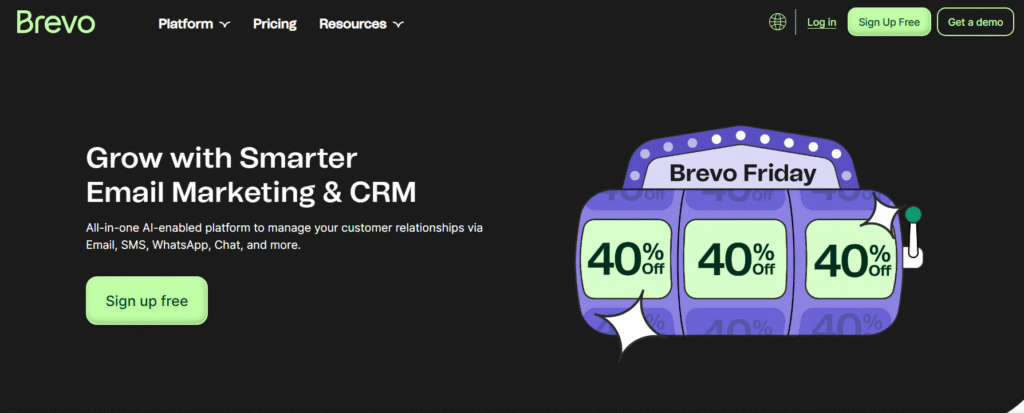
Sendinblue, now known as Brevo, is a cost friendly platform for small and mid sized businesses that want reliable A/B testing without steep pricing. It provides an approachable interface, decent segmentation and practical reporting. Many UK senders running newsletters or service based campaigns rely on it because Brevo stays predictable in cost compared to volume based tools.
Schedule a consultation if you want us to structure simple open rate tests for your weekly campaigns.
Key Features
Send Time Testing
Brevo offers easy testing of send times. This matters for UK based lists because open behaviour differs significantly between early morning and early evening.
Subject Line Variations
You can test two subject lines in a few clicks. Brevo’s dashboard shows clear differences in open performance.
Contact Segment Testing
The platform includes solid segmentation tools. You can test variations across lead type, activity level, region, or engagement score.
Template Tests
Brevo allows HTML and drag and drop template variations. Many “Sendinblue alternatives” searches happen because teams want similar simplicity with wider design options.
SMS and Email Combined Tests
You can compare performance when an SMS reminder complements an email test, useful for appointment based or service based businesses.
Pros and Cons Table
| Pros | Cons |
| Affordable pricing | Limited automation |
| Simple interface | Multi variant tests not supported |
| Good segmentation for SMBs | Light reporting depth |
| SMS options | Integrations less extensive |
| Predictable cost model | Fewer advanced features |
Pricing
Pricing starts at £20 per month with send based thresholds rather than subscriber volume. Higher plans offer more automation options.
Best For SMB Teams and Service Based Businesses
Brevo suits straightforward newsletter and promotional campaigns.
• Local service providers – tests around timing and subject lines
• Small agencies – low cost, easy reporting
• Coaches and consultants – strong deliverability and basic tests
• Small retailers – contact segment tests
• Startups – predictable pricing
Use Brevo’s send time testing with a small segment on weekdays and weekends. Many service businesses notice strong mid morning weekday behaviour that does not translate to Saturdays.
Verdict
Brevo offers the simplest setup for UK SMBs that want dependable A/B testing without extra layers. If your focus is steady open rates rather than complex automation, the platform fits well.
Best Alternate Tool
MailerLite is the best alternative when you want affordable pricing paired with slightly cleaner design tools.
5. Campaign Monitor
Campaign Monitor has a strong presence within UK agencies because it supports clean templates, clear reporting and dependable A/B testing. The platform is particularly useful for senders managing multiple client lists and brand guidelines. Many who search for “Campaign Monitor review” mention its reliable deliverability and straightforward interface.
Book a call if you want support setting up testing frameworks for client campaigns.
Key Features
Template Based A/B Tests
Campaign Monitor allows you to test template variations quickly. Agencies use this to refine newsletters, promotional pushes and announcements for clients.
Subject Line Testing
The subject line test tool delivers clean reporting so teams can present outcome summaries to clients without extra steps.
Visual Journey Testing
You can test full journeys within automated paths, including segment driven messages.
Segmentation Testing
Campaign Monitor supports list segmentation based on location, engagement level, subscriber activity and custom fields.
Analytics and Reporting
Outcome dashboards are polished and easy to share, which is why agencies often choose Campaign Monitor over similar priced tools.
Pros and Cons Table
| Pros | Cons |
| Strong templates | Costs rise with list size |
| Good agency tools | Fewer automation features compared to ActiveCampaign |
| Clean reporting | Lacks advanced segmentation depth |
| Simple setup | Fewer integrations than some platforms |
| Reliable deliverability | Multi variant tests are limited |
Pricing
Campaign Monitor pricing starts at £25 per month with higher tiers unlocking more testing and automation options.
Best For Agencies Managing Multiple Client Campaigns
Campaign Monitor suits setups where presentation, consistency and reliable deliverability matter.
• Creative agencies – polished templates for clients
• Freelance email specialists – easy reporting
• Nonprofits – consistent donor messaging tests
• Publishers – newsletter performance monitoring
• Retail franchises – branded template variations
Use Campaign Monitor’s template testing to compare image heavy vs text first newsletters. Many agencies find text first emails earn higher weekday open rates.
Verdict
If presentation and client friendly reporting are priorities, Campaign Monitor fits well. It gives agencies a stable way to test without extra complexity.
Best Alternate Tool
HubSpot Email is the strongest alternative when CRM data needs to guide A/B test decisions.
6. HubSpot Email

HubSpot Email is widely used in UK B2B teams that want testing linked directly to pipeline stages, lifecycle data and CRM performance. Because the email tool sits inside the HubSpot ecosystem, testing outputs feed back into contact profiles, giving you clarity on how different variations influence sales movement. Many “HubSpot Email review” searches highlight this as the main advantage over lighter platforms.
Schedule a consultation if you want us to structure testing around buyer intent stages inside your CRM.
Key Features
CRM Linked A/B Testing
HubSpot allows you to attach tests to CRM data, giving clear visibility into how subject lines, send times and layout changes influence deal progression.
Personalisation Token Testing
You can test version A with personalisation tokens and version B without them. This shows whether subscriber-specific information improves open behaviour.
Smart Send Time Testing
HubSpot includes smart timing tools that learn from previous data. You can test predictive sending against a fixed schedule to see performance differences.
Behaviour Segment Testing
HubSpot’s segmentation tools allow you to test variations based on recent actions, lead score, lifecycle stage, or contact role.
Reporting Linked to Revenue
Outcome reporting is tied to goal tracking, conversions and pipeline movement. Many “HubSpot alternatives” searches happen because users want this depth without a full CRM commitment.
Pros and Cons Table
| Pros | Cons |
| CRM linked testing | Higher price point |
| Strong reporting | Some features require paid hubs |
| Good segmentation | Setup time for new teams |
| Suitable for B2B | More complex than basic tools |
| Strong personalisation | Not ideal for simple newsletters |
Pricing
HubSpot Email sits inside Marketing Hub. Pricing starts at £40 per month, with deeper testing features available on higher tiers.
Best For B2B Teams Running CRM Guided Campaigns
HubSpot shines in B2B where testing performance needs to influence sales decisions.
• SaaS teams – test nurturing based on lifecycle stages
• B2B agencies – present testing tied to lead quality
• Consultants – measure messaging against booked calls
• Manufacturing and industrial sectors – test buyer intent paths
• Service businesses – refine follow up sequences
Test two versions of the same email with different personalisation tokens. UK audiences often show stronger engagement when receiving role-specific messaging.
Verdict
HubSpot’s testing becomes most effective when you map tests to lifecycle stages. This produces cleaner insight into how messaging impacts sales readiness.
Best Alternate Tool
ActiveCampaign is the closest alternative for teams that want automation testing without committing to a full CRM.
7. GetResponse
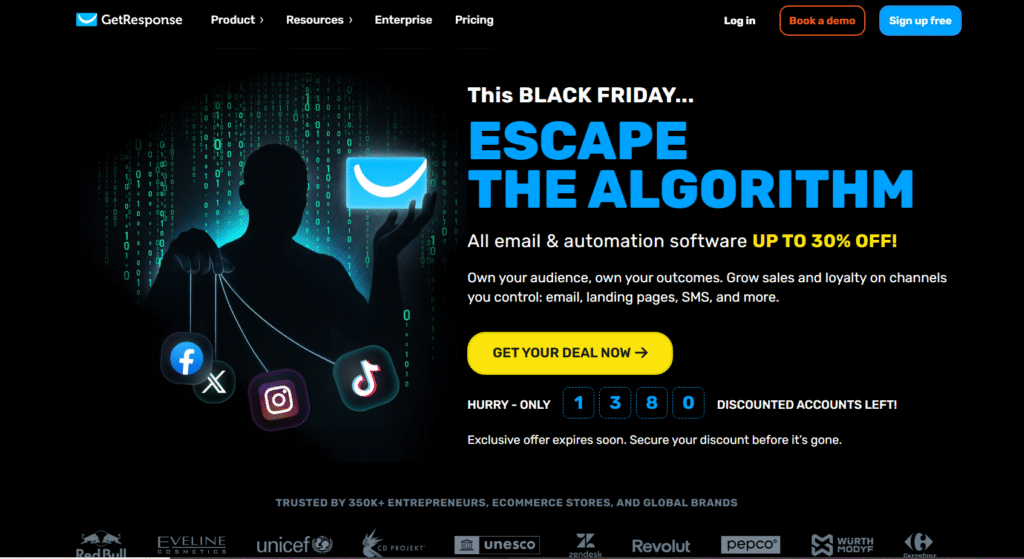
GetResponse is widely used by UK marketers who want a testing tool that includes landing pages, webinars and funnels in one system. Its A/B testing features support full campaign paths rather than isolated emails, which is why “GetResponse review” searches often focus on its all-in-one structure.
Book a call if you want us to build your first test sequence combining pages, emails and automation.
Key Features
Automated A/B Testing
GetResponse lets you create automated tests across entire sequences. This helps when you want to compare different funnel paths.
Subject Line Testing
Simple subject testing helps brands adjust hooks for higher open rates, especially across lead magnets and webinar promotions.
Landing Page Variation Tests
Because GetResponse includes page builders, you can test pages and emails together to examine full funnel behaviour.
Behaviour Based Segment Tests
The platform segments subscribers by actions, enabling you to test different messages for buyers, leads and cold contacts.
Reporting Across Full Funnels
Its reports show testing performance across emails, pages and workflows, which is why “GetResponse alternatives” often focus on funnel-first tools.
Pros and Cons Table
| Pros | Cons |
| Good all in one system | Interface can feel crowded |
| Landing page testing | Costs rise with advanced features |
| Solid automation | Not as deep as specialist tools |
| Clear reporting | Templates slightly dated |
| Practical for funnels | Webinar tool adds complexity |
Pricing
Plans start at £13 per month. A/B testing across full funnels requires higher tier plans.
Best For Marketers Running Full Lead Funnels
GetResponse supports multi channel testing without needing several tools.
• Webinar hosts – test hooks and reminder paths
• Coaches – build and test lead magnet funnels
• Affiliate marketers – compare sequences and pages
• Agencies – run combined tests for clients
• Startup teams – test landing page to email paths
Test two different lead magnet subject lines, then compare the funnel completion rates. Open rate increases are more meaningful when tied to downstream action.
Verdict
GetResponse is best used when you want all testing inside one system. This avoids mismatched datA/Between emails and landing pages.
Best Alternate Tool
ClickFunnels Email Tools (when used with integrations) can be a strong alternative for funnel heavy marketers.
8. ConvertKit
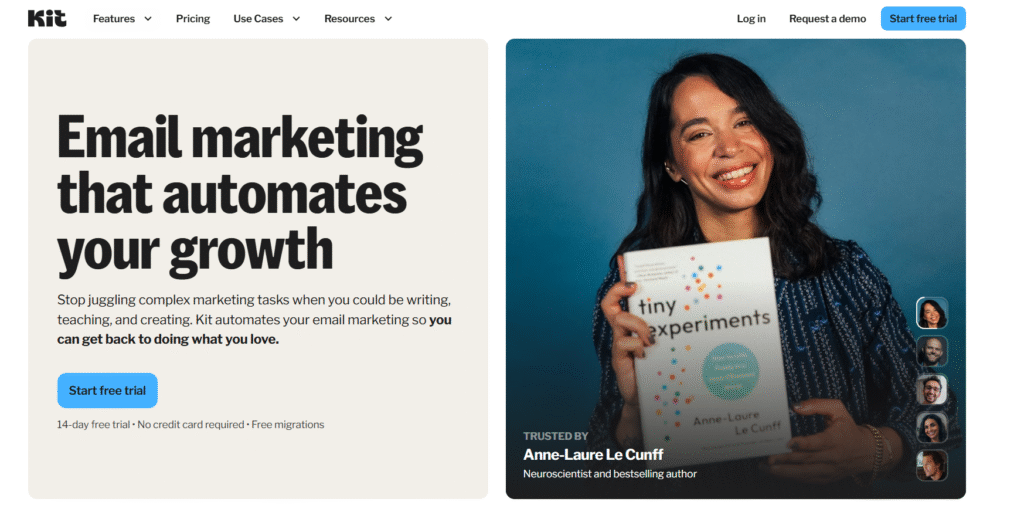
ConvertKit is widely used among UK creators, newsletter writers and educators who want straightforward A/B testing without complex automation. Its strength lies in clean delivery, simple segmentation and predictable behaviour across large content-first lists. Many “ConvertKit review” searches mention ease of use as its biggest advantage.
Schedule a consultation if you want us to set up ConvertKit testing for newsletter growth.
Key Features
Subject Line Testing
ConvertKit offers simple subject tests that are ideal for publishers sending frequent newsletters.
Creator Focused Segmentation
Segment tests can be run for paid subscribers, free subscribers, and category-based content lists.
Clean Plain Text Templates
ConvertKit templates are intentionally minimal, supporting tests focused primarily on wording rather than design.
Broadcast Testing
You can run tests across one-off broadcasts to refine messaging for weekly or daily newsletter cycles.
Subscriber Tag Behaviour Tests
Tags allow you to test messages targeted at groups with specific reading habits.
Pros and Cons Table
| Pros | Cons |
| Very simple to use | Limited automation |
| Strong for newsletters | Not ideal for eCom testing |
| Clean deliverability | Limited template variation |
| Good tagging system | No advanced multi variant tests |
| Creator friendly | Less suited for agencies |
Pricing
ConvertKit pricing begins around £20 per month, with a free tier for basic use.
Best For Creators and Newsletter Senders
ConvertKit works for any content heavy strategy where messaging consistency matters.
• Newsletter writers – regular subject line tests
• Podcasters – segmentation by content interest
• Educators – announcement tests
• Coaches – plain text email comparisons
• Independent media – frequency testing
Run tests on shorter vs longer subject lines. ConvertKit lists often favour tight, specific wording that signals value quickly.
Verdict
ConvertKit is best used when your content style is already established, and you want consistent A/B testing without unnecessary complexity.
Best Alternate Tool
MailerLite is the closest alternative for creators wanting more design flexibility.
9. Omnisend
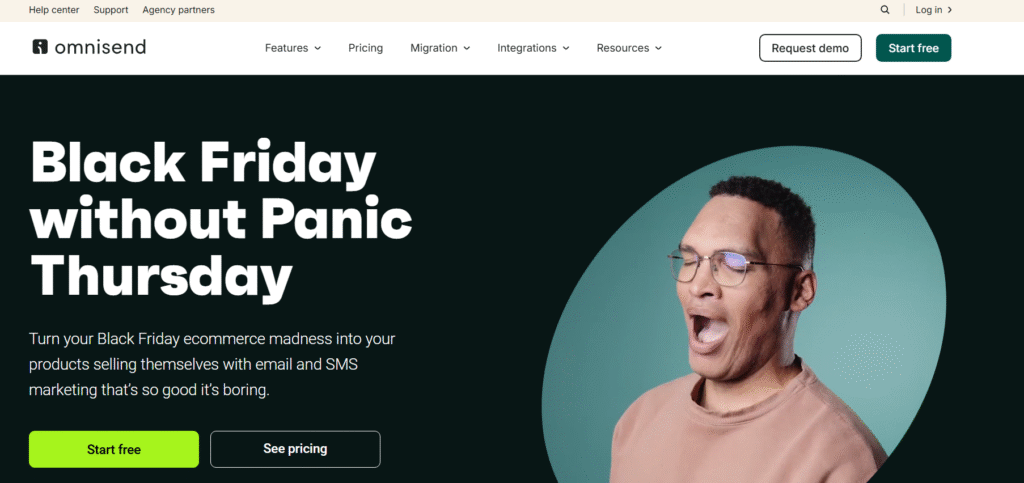
Omnisend is a strong choice for UK retail and DTC brands that want testing tied to customer journeys and store activity. It supports email, SMS and push testing inside the same flow, which helps brands compare performance across multiple channels. Many “Omnisend review” searches highlight ease of use for non technical teams.
Book a call if you want us to shape your Omnisend testing around product categories and returning customer behaviour.
Key Features
Multi Step Flow Testing
Omnisend allows you to test different branches inside automation flows, giving you full sequence intelligence.
Subject Line Testing
Simple subject testing helps refine open rates for product launches, seasonal pushes and cart recovery sequences.
SMS and Push Variant Tests
You can test cross-channel reminders to see which combination yields the highest engagement.
Product Recommendation Tests
Omnisend’s product blocks can be tested to see how different layouts affect click and open behaviour.
Audience Group Testing
Segments such as new buyers, repeat customers and inactive subscribers can be targeted with separate test paths.
Pros and Cons Table
| Pros | Cons |
| Easy for eCom teams | Costs rise with volume |
| Strong automation | Reports could be more detailed |
| Cross channel testing | Not ideal for B2B |
| Shopify friendly | Templates limited in styling |
| Good onboarding | Limited multi variant options |
Pricing
Omnisend pricing starts at £13 per month, depending on list size. SMS testing may require additional cost.
Best For eCom Teams Wanting Cross Channel Testing
Omnisend fits brands that want blended email and SMS testing.
• DTC brands – product linked behaviour tests
• Multi channel retailers – SMS and email comparisons
• Shopify stores – quick setup and revenue insight
• Seasonal brands – peak-period subject tests
• Subscription products – retention flow testing
Test whether email alone or email plus SMS recovers more carts. Many UK retailers find SMS recovery more effective during weekday evenings.
Verdict
Omnisend works best when you use testing inside multi step flows. Treat each branch as A/Behaviour test rather than only testing single messages.
Best Alternate Tool
Klaviyo is the closest alternative when you want deeper segmentation and data-heavy testing.
10. Drip
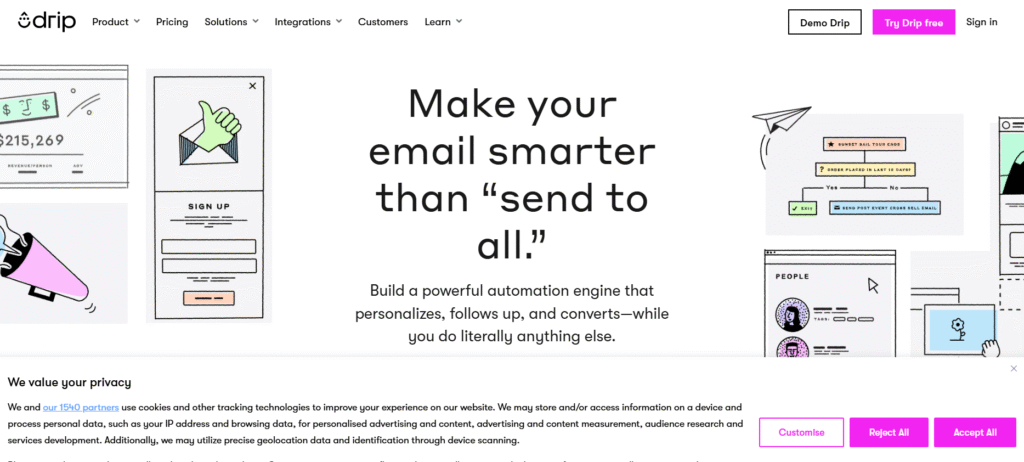
Drip is popular among UK DTC brands because it blends personalisation, automation and testing in a cleaner interface than many heavier tools. It supports behaviour heavy campaigns, making it ideal for brands with repeat customers or frequent product releases. Many “Drip review” searches point to its personalisation engine as the standout feature.
Schedule a consultation if you want custom test paths based on buyer behaviour and product history.
Key Features
Personalised A/B Tests
Drip lets you test personalised sections within emails to see which version resonates more with specific customer types.
Split Path Automation Tests
Automation flows can be divided to test different messages, triggers or timing strategies.
Behaviour Based Segment Testing
Segments based on purchase value, browsing patterns and product history allow for targeted variation tests.
Visual Workflow Builder
The workflow builder lets you design and test full sequences easily.
Revenue Linked Reporting
Reports show how tests influence revenue and return buyer activity.
Pros and Cons Table
| Pros | Cons |
| Great for DTC brands | Higher cost than basic tools |
| Strong personalisation | Not ideal for simple newsletters |
| Good workflow testing | Can feel heavy for small lists |
| Clean interface | Fewer native integrations |
| Revenue focused reports | Limited template library |
Pricing
Drip pricing begins at £30 per month, scaling with list size.
Best For DTC Brands With Repeat Customers
Drip suits retail setups where buyer behaviour guides the campaign structure.
• Lifestyle brands – test new product emails
• Subscription products – renewal sequence testing
• Beauty and skincare – personalised abandon flows
• Clothing brands – category based testing
• Home goods – timing tests around replenishment
Test a personalised product block versus a generic promotional block. DTC audiences in the UK typically respond more strongly to personalised content.
Verdict
Drip is strongest when you use it for behaviour heavy, multi step sequences rather than one off campaigns. Testing inside these flows gives more consistent open rate gains.
Best Alternate Tool
Omnisend is the closest alternative when you want simpler workflows but still need eCom based testing.
11. MailerLite
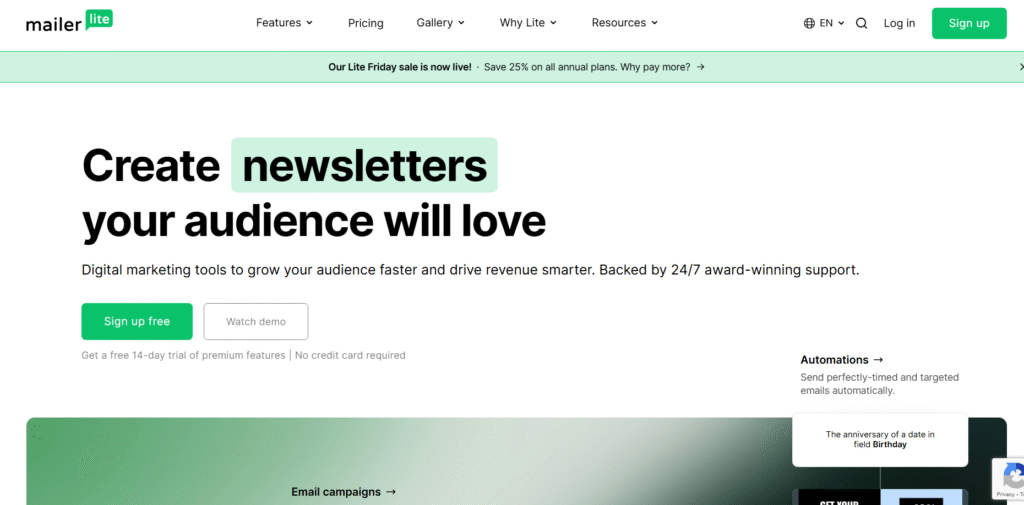
MailerLite is a popular choice among UK freelancers, small agencies and early stage brands that want simple A/B testing without paying for features they do not use. It focuses on clean templates, dependable deliverability and easy testing tools, which is why many “MailerLite review” searches highlight it as one of the strongest budget friendly platforms.
Schedule a consultation if you want us to set up your first round of MailerLite tests geared towards open rate consistency.
Key Features
Simple A/B Testing
MailerLite provides a clean A/B testing interface suitable for subject lines, content blocks and basic layout comparisons. This is useful when you want steady improvements without building complex automations.
Drag and Drop Template Testing
You can compare two template variations easily. This helps small teams refine newsletters and promotional messages without relying on code.
Segment Based Testing
MailerLite supports subscriber tags and segments that allow for targeted testing across interest groups, regions or activity levels.
Automation Email Testing
Even though MailerLite is simple, it still supports testing inside automated sequences, giving smaller teams room to test without upgrading platforms.
Analytics Dashboard
Reports show open rates, click activity and engagement comparison between variants. Many “MailerLite alternatives” searches focus on tools with deeper analytics, but for smaller senders, this dashboard is usually enough.
Pros and Cons Table
| Pros | Cons |
| Very affordable | Limited multi variant tests |
| Clean interface | Not ideal for large teams |
| Strong deliverability | Basic automation |
| Good for newsletters | Fewer integrations |
| Easy template tests | Less suited for advanced segmentation |
Pricing
MailerLite pricing starts at £9 per month, with a solid free tier for light use.
Best For New Senders and Lean Teams
MailerLite works well when resources are limited and campaigns stay simple.
• Freelancers – weekly newsletters and basic testing
• Small agencies – budget friendly client campaigns
• Consultants – steady open rate refinement
• Hobby projects – simple broadcast testing
• Startups – early stage list building
Test short, highly specific subject lines. MailerLite audiences tend to favour messages that signal value within the first few words.
Verdict
Because MailerLite stays simple, focus on testing only one variable at a time. This gives clearer and quicker insights, especially on smaller lists.
Best Alternate Tool
ConvertKit is the closest alternative for creators wanting slightly more content focused features.
12. Moosend
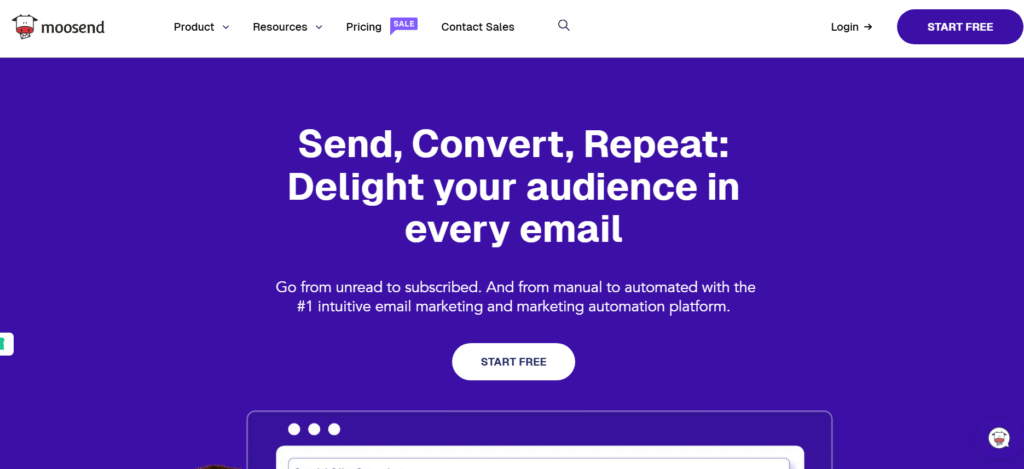
Moosend attracts UK users who want functional A/B testing with clear reporting at a lower price point than many competitors. It integrates well with several CMS platforms, making it a practical choice for expanding businesses. “Moosend review” searches often emphasise the platform’s simplicity paired with value for money.
Book a call if you want Moosend test setups that match newsletter and promo cycles.
Key Features
A/B Campaign Testing
Moosend supports subject line, sender name and content variation tests. Its testing wizard lets you launch comparisons with minimal effort.
Personalisation Block Testing
You can compare personalised content blocks to see whether dynamic recommendations influence open and click patterns.
Automation Testing
Moosend includes basic automation and split path testing, giving growing lists the ability to refine behaviour based campaigns.
Template Variation Testing
HTML and drag and drop templates can be tested against one another for engagement shifts.
Behaviour Reporting
Reports highlight behavioural trends, helping teams adjust messaging based on timing and content preferences. Many “Moosend alternatives” searches come from users seeking deeper automation.
Pros and Cons Table
| Pros | Cons |
| Cost efficient | Limited advanced workflows |
| Easy to use | Basic segmentation depth |
| Good deliverability | Interface slightly dated |
| Solid testing basics | Fewer integrations |
| Works for growing lists | Less suited for enterprise |
Pricing
Moosend pricing begins at £7 per month, making it one of the more affordable tools on this list.
Best For Budget Conscious Marketers and Growing Lists
Moosend fits well where simplicity and cost control matter.
• Startups – budget friendly testing
• Early eCom brands – basic product announcement tests
• Content sites – newsletter refinement
• Local services – subject line comparisons
• New agencies – managing several small lists
Test sender names. Moosend lists often respond differently when receiving emails from a person rather than A/Brand.
Verdict
Moosend works best when your list is still growing and you need dependable testing without heavy automation.
Best Alternate Tool
MailerLite is the best alternative for those wanting similar pricing with a slightly cleaner interface.
13. SendGrid
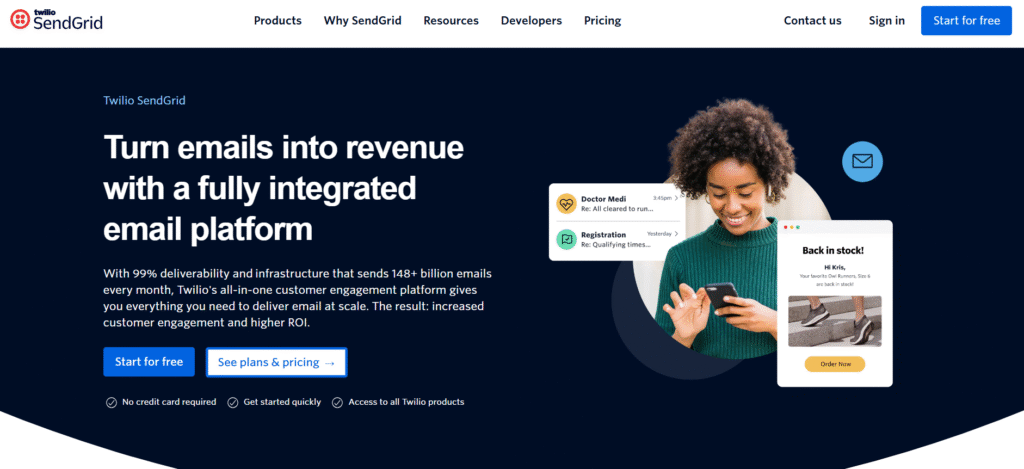
SendGrid is a leading email delivery platform used widely across UK SaaS teams, developers and transactional senders who need precise testing at scale. Its A/B testing capabilities support subject lines, body text and sender identity, with an emphasis on high deliverability. Many “SendGrid review” searches focus on API flexibility.
Schedule a consultation if you want guidance integrating A/B tests within API or transactional workflows.
Key Features
API Linked A/B Testing
SendGrid allows developers to run A/B tests directly through API calls. This is useful when testing transactional emails or automated system alerts.
Subject Line Variation Tests
Subject testing helps refine high volume sends where performance differences compound quickly.
Template Testing With Code Support
Developers can test coded templates in addition to drag and drop versions.
Deliverability Reports
SendGrid reports include spam filters, bounce patterns and inbox placement indicators, helping teams refine messages for higher open rates.
Category Based Testing
You can test campaigns based on defined categories to measure patterns across different message types.
Pros and Cons Table
| Pros | Cons |
| Excellent deliverability | Not suited for non technical users |
| Strong API control | Interface feels technical |
| Good for transactional sends | Limited drag and drop features |
| Scales reliably | Costs increase with heavy volume |
| Solid reporting | Less intuitive than marketing platforms |
Pricing
SendGrid pricing starts at £12 per month, with pay as you go options for lower send volumes.
Best For Developers and SaaS Teams
SendGrid fits environments where emails are triggered programmatically or at high volume.
• SaaS apps – transactional testing
• Tech startups – API heavy workflows
• Financial platforms – regulatory email testing
• Product teams – behavioural notifications
• Marketplaces – system message comparisons
Test from-domain variations. SendGrid’s deliverability dashboard will show meaningful differences influenced by subtle domain shifts.
Verdict
SendGrid is strongest when used for transactional or high volume sends where deliverability and API oversight matter more than design.
Best Alternate Tool
Amazon SES with custom testing setups works as an alternative for teams that want deeper developer control.
14. Litmus
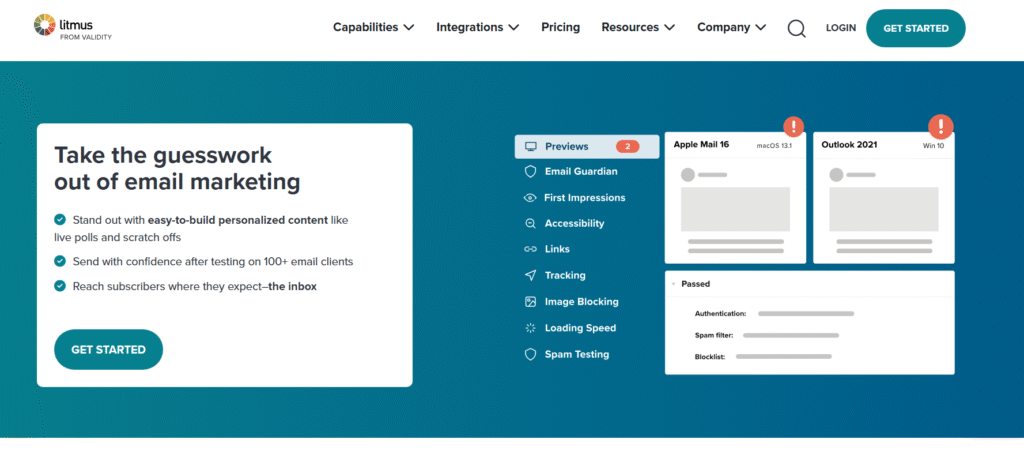
Litmus is widely used in UK agencies and enterprise teams for its advanced testing, preview features and quality assurance tools. It is not a sending platform itself but integrates with platforms like Mailchimp, HubSpot and Marketo. Many “Litmus review” searches highlight its rendering tests across devices and clients.
Book a call if you want us to integrate Litmus into your production workflow.
Key Features
Email Rendering Tests
Litmus shows how emails appear across 90 plus devices and clients. This prevents design based open rate drops due to rendering issues.
A/B Testing Insights
Litmus provides analytics and insights on how different subject lines and content variations perform when integrated with your sending tool.
Pre Send Quality Checks
Checks for accessibility, broken links, loading issues and spam triggers before sending. This cleans up issues that would have suppressed open rates.
Engagement Heatmaps
Heatmaps give visibility into where readers focus, helping you refine content position and call to action placement.
Platform Integrations
Litmus connects with most major email platforms. This is why “Litmus alternatives” often refer to full service platforms that attempt to replace it.
Pros and Cons Table
| Pros | Cons |
| Excellent previews | Requires another sending tool |
| Strong quality checks | Higher cost |
| Detailed analytics | Overkill for small senders |
| Heatmaps | Learning curve for non technical users |
| Great for enterprise | Not ideal for basic newsletters |
Pricing
Litmus pricing starts at around £60 per month, depending on the number of users and features.
Best For Agencies and Enterprise Teams With High Production Standards
Litmus suits teams that send heavily designed emails where rendering mistakes carry financial risk.
• Agencies – quality control across clients
• Retail chains – design heavy promotional emails
• Publishers – template testing
• SaaS teams – consistent client side rendering
• Corporations – brand compliant messaging
Test preview text combinations. Litmus shows how various email clients cut or wrap preview text, which directly affects open behaviour.
Verdict
Litmus is most impactful when used as a QA and analytics layer on top of an existing email platform. It is best for high output teams.
Best Alternate Tool
Email on Acid is the closest equivalent for advanced testing and previews.
15. Vero
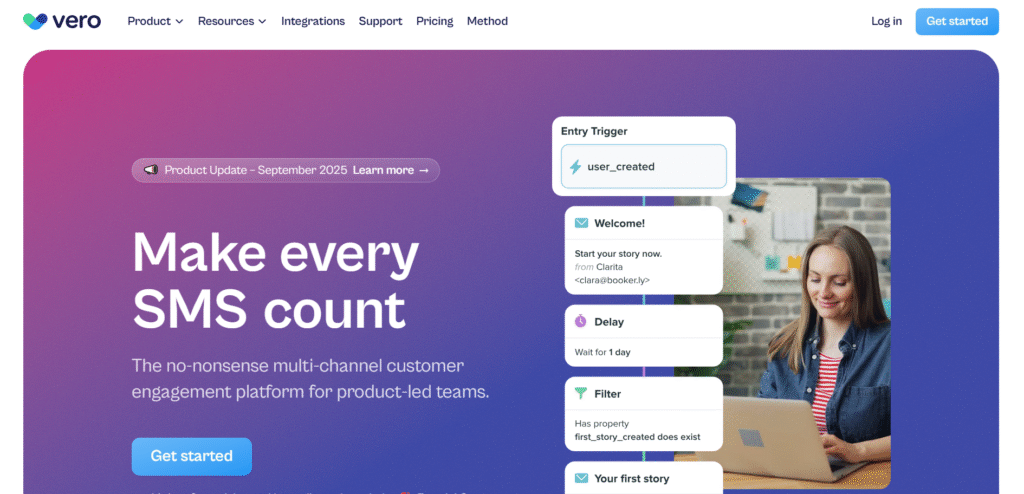
Vero is a solid option for SaaS teams that want user behaviour based testing without overwhelming interfaces. It supports tests across behaviour driven automations, making it a good fit for product led cycles. Many “Vero review” searches mention that it balances capability with usability.
Schedule a consultation if you want A/Behaviour based testing setup aligned with your product activity.
Key Features
Behaviour Trigger Testing
Vero triggers emails based on user actions, allowing you to test behaviour driven messages directly inside your product lifecycle.
Workflow Variation Tests
Automation flows can be tested to compare onboarding paths, feature adoption nudges and churn prevention messages.
Segment Testing
Segments based on activity level, usage patterns, subscription type and device behaviour allow for well targeted tests.
Personalised Content Tests
Vero supports personalised content blocks, letting you trial behavioural and demographic variations.
Product Analytics Integration
Data connections allow you to feed product metrics into test evaluations, which is why “Vero alternatives” often focus on tools like Customer.io.
Pros and Cons Table
| Pros | Cons |
| Ideal for SaaS | Smaller template library |
| Behaviour heavy testing | Not suited for eCom retail |
| Good segmentation | Limited design tools |
| Useful workflows | Requires product data integration |
| Clean interface | Less known than competitors |
Pricing
Vero pricing starts at £30 per month, scaling with contact volume.
Best For SaaS Teams Running Product Behaviour Campaigns
Vero fits product led environments where email performance reflects user activity.
• SaaS onboarding teams – test first week sequences
• Product teams – activation tests
• Growth teams – churn prevention testing
• Subscription models – renewal tests
• App based companies – usage based reminders
Test onboarding flow timing. Many SaaS teams find that day 1 messaging performs differently depending on time of day.
Verdict
Vero is best used when you want testing aligned with product metrics rather than broad marketing lists.
Best Alternate Tool
Customer.io is the most comparable alternative for behaviour heavy testing.
16. Zoho Campaigns
Zoho Campaigns is a fitting choice for UK teams already using Zoho CRM or other Zoho products. Its A/B testing options cover subject lines, send times and content variations, supported by CRM-linked data when integrated. Many “Zoho Campaigns review” searches mention that its value grows significantly when paired with other Zoho tools.
Schedule a consultation if you want us to align Zoho Campaigns testing with your CRM activity and segmentation.
Key Features
Subject Line and Content Tests
Zoho Campaigns offers simple A/B tests for subject lines, preview text and email content. This supports straightforward open rate refinement.
Workflow Split Testing
Basic split testing can be applied inside autoresponders, letting you compare different follow up messages.
CRM Linked Segments
When connected to Zoho CRM, you can run tests on segments built from deal stages, lead scores or prospect categories.
Template Variation Tests
Drag and drop templates can be tested against HTML versions to identify which layout earns stronger engagement.
Campaign Analytics
Reporting covers open rates, click activity, segment behaviour and device usage. Many “Zoho Campaigns alternatives” searches come from teams wanting deeper automation.
Pros and Cons Table
| Pros | Cons |
| Works well with Zoho CRM | Limited automation flexibility |
| Affordable | Interface can feel dated |
| Clean segmentation | Lighter analytic detail |
| Good for SMBs | Multi variant testing is absent |
| Predictable pricing | Templates less modern |
Pricing
Zoho Campaigns pricing begins at £6 per month, making it one of the lowest cost tools in this list.
Best For Teams Using the Zoho Suite
It is ideal for organisations that already rely on Zoho products and want consistent data flow.
• Service providers – CRM backed segmentation tests
• SMB teams – predictable subject testing
• Consultants – list hygiene tests
• Local businesses – newsletter variation tests
• Franchise groups – brand aligned layouts
Test delivery timing against CRM-derived segments. Different buyer journeys respond differently based on contact stage, especially in B2B setups.
Verdict
Zoho Campaigns is best used when you want testing tied to Zoho CRM without committing to complex workflows or heavy automation tools.
Best Alternate Tool
HubSpot Email is the strongest alternative when you want deeper CRM-linked testing.
17. Mailjet
Mailjet is popular among UK marketing departments that need collaborative editing, approval workflows and simple A/B tests wrapped in one platform. Its strength lies in its teamwork features rather than heavy automation. Many “Mailjet review” searches highlight its collaborative editor as the main attraction.
Book a call if you want us to build team friendly testing structures inside Mailjet.
Key Features
Template A/B Testing
Mailjet makes template testing straightforward, which is useful when multiple team members contribute to design and content.
Subject Line Tests
The subject testing tool is simple and effective for improving open rates on newsletters and promotional emails.
Collaboration Tools
Multiple users can work together on templates and campaigns with permission controls, useful for internal marketing teams.
API and SMTP Options
Teams with developers can run technical tests using the platform’s email APIs.
Segmented Sends
Mailjet supports list-based segmentation for targeted tests, though not as detailed as eCom or SaaS-focused tools.
Pros and Cons Table
| Pros | Cons |
| Strong collaboration | Limited automation depth |
| Clean interface | Not ideal for advanced segment testing |
| Good deliverability | Limited personalisation options |
| Easy subject tests | Template library is modest |
| Affordable | Reports could be more detailed |
Pricing
Mailjet pricing starts at £12 per month, with higher tiers supporting more collaborative features.
Best For Teams Needing Collaboration and Shared Editing
Mailjet suits in-house teams managing brand guidelines and content reviews.
• Corporate marketing teams – shared campaign building
• Agencies – collaborative reviewer access
• Hospitality brands – frequent promotional testing
• Publishers – shared newsletter production
• Retail teams – template approvals
Use Mailjet’s collaboration tools to test two design variations created by different team members. This often uncovers style differences that influence open and click behaviour.
Verdict
Mailjet thrives when multiple contributors are involved in campaigns. Its testing tools support steady improvement without complexity.
Best Alternate Tool
Campaign Monitor is a good alternative for more polished template and reporting needs.
18. Constant Contact
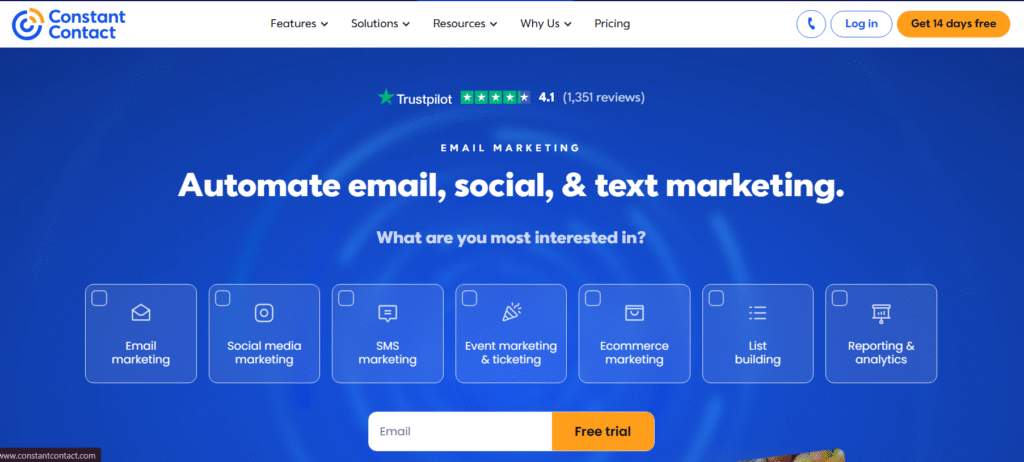
Constant Contact is widely used by UK charities, community groups, small service providers and event-based organisations. It offers straightforward A/B testing with a clear workflow suited to non technical senders. Many “Constant Contact review” searches highlight reliability and support availability.
Schedule a consultation if you want us to map testing around your event cycles or newsletter schedule.
Key Features
Subject Line A/B Testing
Constant Contact includes an easy subject testing module ideal for event announcements, reminders and community updates.
Template Comparisons
Teams can test two template versions to see which delivers better engagement.
Event Integration Testing
For event-driven campaigns, you can test reminder sequence variations.
Contact Segments
Segments based on activity, list membership and custom tags allow targeted testing.
Reporting Dashboard
Reports are simple but clear, giving visibility into open patterns across different audience types.
Pros and Cons Table
| Pros | Cons |
| Very user friendly | Limited automation |
| Ideal for small teams | Fewer advanced features |
| Good support | No multi variant testing |
| Event integration | Templates feel dated |
| Works for community groups | Less suited for large retailers |
Pricing
Pricing starts at £20 per month, with event features on higher plans.
Best For SMB and Community Focused Campaigns
Constant Contact fits teams sending newsletters, event messages and local updates.
• Community groups – steady subject testing
• Nonprofits – donor message comparisons
• Local services – scheduling tests
• Event planners – reminder variations
• Hobby groups – engagement tests
Test two versions of event reminder subject lines with different urgency levels. Community driven lists often respond best to direct and clear reminders.
Verdict
Constant Contact is reliable for simple testing needs without steep learning curves. It works best for event focused or community based campaigns.
Best Alternate Tool
Sendinblue Brevo is the closest budget friendly alternative for SMB senders.
19. Sender

Sender is chosen by many UK startups and new marketers who want simple A/B testing, clean templates and predictable costs. It is built for users who prefer a minimal setup. Many “Sender review” searches mention value for money as a deciding factor.
Book a call if you want us to configure Sender for your early stage campaigns.
Key Features
Basic A/B Testing
Sender offers subject and content variation tests suitable for early growth campaigns.
High Deliverability
Sender focuses on deliverability, helping new lists maintain healthy inbox placement.
Drag and Drop Templates
Template variations can be created easily, supporting quick design tests.
Automation Lite
Basic automation flows can be split-tested, useful for early nurturing sequences.
Behaviour Insights
Reports highlight open activity and time-of-day performance, helping shape future tests.
Pros and Cons Table
| Pros | Cons |
| Very affordable | Limited depth |
| Clean interface | Not suited for large operations |
| Good deliverability | Basic segmentation |
| Simple testing | Fewer integrations |
| Works for early stage lists | No complex workflows |
Pricing
Sender starts at £8 per month, with generous free allowances for small lists.
Best For Startups and Small Early Stage Lists
Sender fits teams that want to keep costs minimal while refining open rates.
• Startups – testing early messaging
• Freelancers – simple newsletters
• New e-Com ventures – basic product tests
• Creators – announcement tests
• Local businesses – promotional testing
Test basic preview text changes. With newer lists, preview text often influences opens more than subject lines.
Verdict
Sender is best used as an entry level testing platform until more complex needs appear.
Best Alternate Tool
MailerLite is the closest low cost alternative with cleaner design options.
20. Benchmark Email
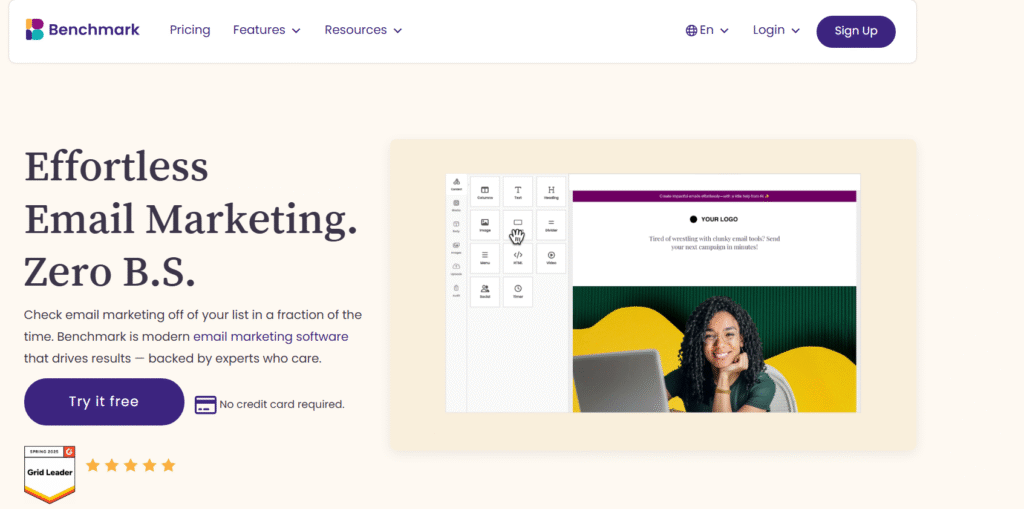
Benchmark Email is used by UK teams who want dependable testing, clean templates and a gentle learning curve. It supports newsletters, promotions and follow up paths with straightforward A/B testing options. Many “Benchmark Email review” searches highlight its value for general-purpose email marketing.
Schedule a consultation if you want us to implement a structured testing plan on Benchmark Email.
Key Features
Subject Line Testing
Benchmark’s subject tests are simple but effective for weekly newsletters and promotional sequences.
Template Variation Tests
Design variations can be tested quickly without needing technical skills.
List Segment Testing
Subscriber activity segments allow for targeted tests across groups.
Automation Testing
Automation paths include simple split tests suitable for nurturing flows.
Email Deliverability Tools
Benchmark includes built-in deliverability monitoring that influences open rate performance.
Pros and Cons Table
| Pros | Cons |
| Easy interface | Limited advanced workflows |
| Good templates | Reporting less detailed |
| Solid deliverability | No multi variant tests |
| Works across industries | Basic segmentation |
| Affordable | Integration list is smaller |
Pricing
Benchmark Email pricing begins at £10 per month, depending on contacts and features.
Best For General Purpose Senders Across Multiple Sectors
Benchmark Email suits organisations with mixed campaign needs.
• General marketers – newsletter and promo tests
• Agencies – simple client tests
• Local retailers – promotional comparisons
• Service businesses – reminder sequences
• Creators – regular updates
Test short versus mid-length subject lines. Benchmark lists often respond better to concise, expectation-setting wording.
Verdict
Benchmark offers A/Balance of simplicity and reliability, making it suitable for teams that want predictable testing without complex learning curves.
Best Alternate Tool
Constant Contact is a fitting alternative for teams wanting similar simplicity with stronger event features.
Final Verdict
Selecting the right email A/B testing platform gives you the structure needed to raise open rates using steady, measurable adjustments. Each tool on this list supports a different type of sender, from eCom brands and SaaS teams to creators, agencies and local service businesses.
The strongest results come from running consistent tests, reading the patterns and applying the learning to future campaigns.
If you want support choosing a platform or shaping your first testing framework, schedule a consultation with Pearl Lemon Leads and we can map the setup around your goals.
How Our Team Supports Email A/B Testing
Our team builds testing routines for brands that want stronger, more predictable open rates. We create structured test plans, segment variations, timing evaluations and automation path tests that match your audience and sending cycle. Whether you need weekly subject line tests, eCom flow testing, SaaS behaviour variations or newsletter improvements, we provide complete testing setups you can rely on.
If you want a fresh set of eyes on your email strategy, book a call and we will walk you through a practical plan tailored to your list size, goals and content style.
Frequently Asked Questions
1. How often should I run email A/B tests?
Weekly testing is ideal for most lists. High volume senders can test more frequently, while smaller lists should test less often to collect meaningful data.
2. What is the best variable to test first?
Subject lines usually influence open rates the most. Preview text and send time are also strong early variables.
3. Do I need a large list to run meaningful tests?
No, you can still gather useful insights with smaller lists if tests are run consistently and variables stay simple.
4. Should I test more than one element at a time?
Avoid testing multiple variables in early stages. Single variable tests give clearer results.
5. Does timing matter for email A/B tests?
Yes, UK audiences behave differently on weekdays, weekends and during seasonal peaks.
6. What metrics should I track besides open rate?
Click rate, downstream conversions, segment behaviour and inbox placement offer clearer clarity on long term performance.
7. Can I run A/B tests inside automation workflows?
Most advanced platforms allow split tests in automation paths, which often give stronger behavioural insights.
8. How long should an A/B test run?
Until a meaningful sample size is reached. This varies depending on list size and engagement levels.
9. How do I know when a test is valid?
A clear performance gap between variants, with sufficient sample size, indicates reliable results.
10. Should I archive losing variants?
Yes, retain them for reference but avoid reusing them unless they serve another purpose in future tests.
{ “@context”: “https://schema.org”, “@type”: “FAQPage”, “mainEntity”: [ { “@type”: “Question”, “name”: ” How often should I run email A/B tests?”, “acceptedAnswer”: { “@type”: “Answer”, “text”: “Weekly testing is ideal for most lists. High volume senders can test more frequently, while smaller lists should test less often to collect meaningful data.” } }, { “@type”: “Question”, “name”: ” What is the best variable to test first?”, “acceptedAnswer”: { “@type”: “Answer”, “text”: “Subject lines usually influence open rates the most. Preview text and send time are also strong early variables.” } }, { “@type”: “Question”, “name”: “Do I need a large list to run meaningful tests?”, “acceptedAnswer”: { “@type”: “Answer”, “text”: “No, you can still gather useful insights with smaller lists if tests are run consistently and variables stay simple.” } }, { “@type”: “Question”, “name”: “Should I test more than one element at a time?”, “acceptedAnswer”: { “@type”: “Answer”, “text”: “Avoid testing multiple variables in early stages. Single variable tests give clearer results.” } }, { “@type”: “Question”, “name”: ” Does timing matter for email A/B tests?”, “acceptedAnswer”: { “@type”: “Answer”, “text”: “Yes, UK audiences behave differently on weekdays, weekends and during seasonal peaks.” } }, { “@type”: “Question”, “name”: “What metrics should I track besides open rate?”, “acceptedAnswer”: { “@type”: “Answer”, “text”: “Click rate, downstream conversions, segment behaviour and inbox placement offer clearer clarity on long term performance.” } }, { “@type”: “Question”, “name”: “Can I run A/B tests inside automation workflows?”, “acceptedAnswer”: { “@type”: “Answer”, “text”: “Most advanced platforms allow split tests in automation paths, which often give stronger behavioural insights.” } }, { “@type”: “Question”, “name”: ” How long should an A/B test run?”, “acceptedAnswer”: { “@type”: “Answer”, “text”: “Until a meaningful sample size is reached. This varies depending on list size and engagement levels.” } }, { “@type”: “Question”, “name”: “How do I know when a test is valid?”, “acceptedAnswer”: { “@type”: “Answer”, “text”: “A clear performance gap between variants, with sufficient sample size, indicates reliable results.” } }, { “@type”: “Question”, “name”: “Should I archive losing variants?”, “acceptedAnswer”: { “@type”: “Answer”, “text”: “Yes, retain them for reference but avoid reusing them unless they serve another purpose in future tests.” } } ] }